
Potholes, Pulling, and Clunks: A San Francisco Driver’s Guide to Surviving City Streets
San Francisco roads have unique challenges. We have sun, rain,fog, sea air and a ton of visitors yearly. This causes a lot of wear and tear on our roads and freeways that can punish your car, particularly if you’re a commuter. No let’s talk potholes.
Pothole damage doesn’t always show up immediately. You might hit a pothole in the Sunset, SoMa, the Richmond, or anywhere in between and think, “Eh… we’re fine.” Then a week later your steering wheel is shaking, the car is pulling, or your tire pressure light comes on. We mostly get asked” will my insurance cover pothole damage?” and although we can not tell you that, the answer is a simple call away.
Here’s what potholes can damage, the signs to watch for, what to do next, and how insurance may help cover repairs so a single pothole doesn’t turn into an expensive chain reaction.
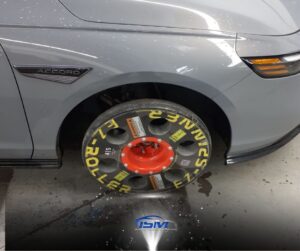
Pothole causes wheel damage
What a pothole can damage (even if your car still drives “okay”)
A pothole impact can affect more than your tire. Common issues we see around San Francisco and the Bay Area include:
1) Tires
- Tire sidewall bubble (a bulge on the side of the tire)
- Cuts, punctures, or internal belt damage
- Rapid or uneven wear after the hit
If you see a bubble, don’t wait—sidewall damage isn’t repairable, and that tire is at higher risk of failure.
2) Wheels (rims)
- Bent wheel rim causing vibration and balancing issues
- Cracked wheels that leak air or weaken the wheel
A bent wheel can feel like “mystery vibration” at highway speeds—until it becomes “why is my car shaking like a washing machine?”
3) Alignment
A pothole can knock alignment out just enough to:
- wear tires faster (sometimes shockingly fast)
- make the car pull left or right
- throw off steering feel and stability
If you’re searching wheel alignment in San Francisco after a pothole hit, you’re not alone—this is one of the most common outcomes we see.
4) Suspension & steering parts
Pothole hits can accelerate wear or cause damage to:
- tie rods
- ball joints
- control arms & bushings
- struts/shocks
- wheel bearings
These components take the brunt of impacts—especially on heavier vehicles and many European models with tighter suspension geometry. Many times we need to recalibrate the ADAS system in newer cars.
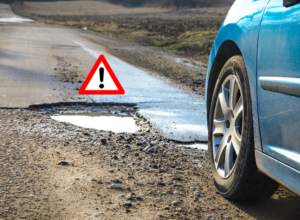
7 signs your car took pothole damage
If you notice any of these after a pothole hit, it’s worth having it checked:
- Car pulls left or right on a straight road
- Steering wheel is off-center (you’re straight, wheel isn’t)
- Steering wheel vibration at speed (often 50–70 mph)
- New clunking/knocking over bumps
- Slow tire leaks or you’re topping off air frequently
- Uneven tire wear (inner or outer edge wearing faster)
- ABS / traction / TPMS lights coming on (sometimes impact-related)
San Francisco bonus sign: if your car suddenly feels “busy” on Highway 1, 280, or 101—like it can’t settle into a straight line—alignment or suspension wear is often the culprit.
What to do right after you hit a pothole
If it’s safe to pull over:
- Inspect the tire sidewall for bubbles, bulges, or cuts
- Check tire pressure (TPMS may not update instantly)
- Listen on your next drive for new noises over bumps
- Pay attention to steering feel (pulling, vibration, wandering)
Even if everything seems fine, consider a quick inspection—because the most expensive pothole damage is the kind that quietly chews up your tires for the next few thousand miles.
Will insurance cover pothole damage in San Francisco?
Sometimes, yes. Many drivers don’t realize that pothole-related damage (tires, wheels, alignment issues, steering, and suspension components) may be covered by auto insurance.
A few helpful realities:
- Coverage varies by policy, and claims are typically subject to your deductible.
- If the damage is significant (bent wheel, suspension damage, steering issues), a claim may make financial sense.
- For smaller issues (like an alignment), it may be cheaper to handle it out-of-pocket—but it depends.
Tips if you’re considering a claim
To help your claim go smoothly, it’s smart to document:
- A quick photo of the pothole (if safe) and the surrounding area/street sign
- Photos of visible damage (tire bubble, bent rim, etc.)
- The date/time and location of the incident
- Any warning lights that appeared after
- A professional inspection report/estimate (this is where we can help)
If you’re unsure, you can also call your insurance company and ask what’s covered before you commit.
Extra note: Some drivers also explore filing a claim through the city/county for road-related damage. Those processes can be strict and time-sensitive, and results vary but keeping documentation helps either way.
Why “I’ll deal with it later” gets expensive
A slightly bent wheel or a small alignment shift can lead to:
- tires wearing out early
- extra stress on steering/suspension components
- reduced stability in wet weather (hello, Bay Area rain)
- longer stopping distances if traction is compromised
Translation: sometimes the pothole doesn’t just hit once, it keeps hitting your wallet.
Quick prevention tips for San Francisco + Bay Area drivers
- Keep tires properly inflated (underinflation makes impacts worse)
- Don’t ignore vibrations—they rarely fix themselves
- Rotate tires on schedule (it helps catch early wear patterns)
- Get an alignment check if you hit a pothole hard or notice pulling
Need a pothole damage, alignment, or suspension check in San Francisco?
If you hit a pothole or your car feels “off,” we can help you get answers before it turns into bigger repairs (or a surprise tire replacement you didn’t budget for).
International Sport Motors
440 9th Street, San Francisco, CA 94103
Phone: 415-551-9930
Book online: www.ismotors.com