

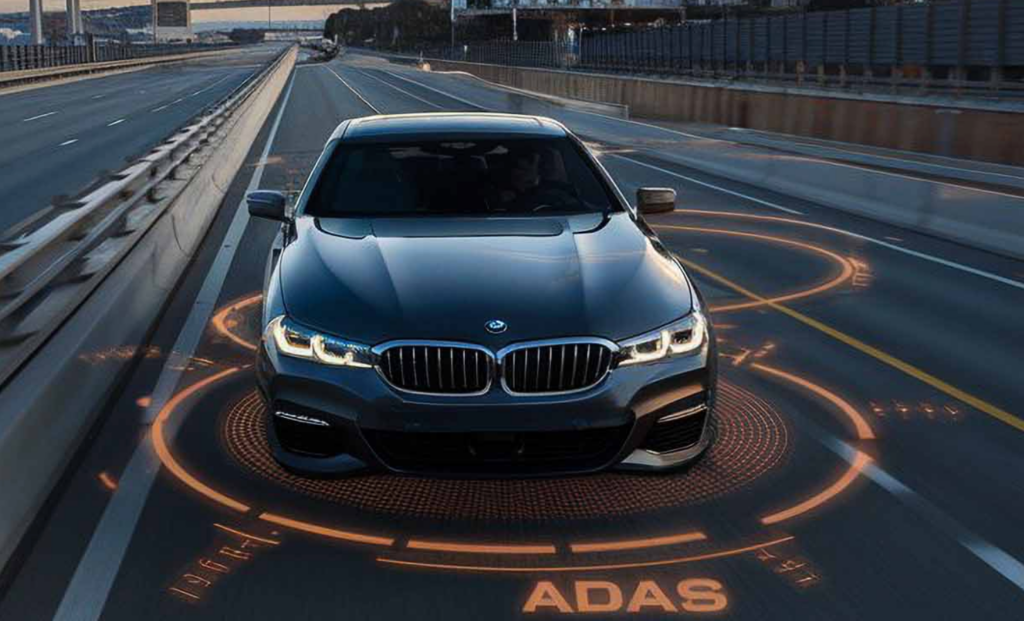
car on golden gate bridge with sensors outside
What Is ADAS Calibration? A Simple Guide for San Francisco Drivers
Today’s cars are packed with smart safety features, but most drivers don’t know what they’re called… or how important they are.
If your car helps you stay in your lane, warns you about a possible collision, or even brakes for you automatically, you’re already using something called ADAS.
And here’s the part most people don’t realize:
After certain repairs, or even a small bump, those systems may need to be recalibrated to work properly. So is ADAS Calibration really a thing? Absolutely.
What Is ADAS (Advanced Driver Assistance Systems)?
ADAS stands for Advanced Driver Assistance Systems.
That might sound technical, but the idea is simple—these are the built-in safety features designed to help prevent accidents and make driving easier.
Depending on what you drive, your vehicle may call it something like:
- Toyota Safety Sense
- Honda Sensing
- Subaru EyeSight
- Kia Drive Wise
- Hyundai SmartSense
Different names… same goal: helping keep you safe on the road.
These systems use cameras, radar, and sensors placed around your vehicle to “see” what’s happening around you.
What Does “Calibration” Actually Mean?
Think of it like this…
Your vehicle’s cameras and sensors need to be aimed perfectly to understand the road correctly.
Calibration is the process of making sure everything is aligned exactly the way the manufacturer designed it.
Even being slightly off can change how your car reacts.
When Does Your Car Need ADAS Calibration?
This is where a lot of drivers get caught off guard.
You may need calibration after:
- A collision (even a minor one)
- Windshield replacement
- Bumper repair or replacement
- Wheel alignment or suspension work
- Replacing a sensor or camera
- Seeing a warning light related to safety systems
In San Francisco, where tight parking and stop-and-go traffic are part of daily life, even a small impact can affect these systems.
Why It Matters More Than You Think
Here’s the thing—your car might still feel completely normal.
But your safety systems could be off just enough to:
- React too late
- Misjudge distance
- Fail to warn you when needed
- Or activate when they shouldn’t
That’s not something you want to leave to chance—especially on busy streets or highways.
Real Example (This One Happens All the Time)
Let’s say you replace your windshield.
Many vehicles—especially those with systems like Subaru EyeSight or Honda Sensing—have cameras mounted directly behind the glass.
If that camera isn’t recalibrated after installation, it may not “see” the road correctly anymore.
Everything might look fine… until you actually need it.
Not Every Auto Shop Is Equipped to repair ADAS
ADAS calibration isn’t a basic service. It requires:
- Specialized calibration equipment
- A controlled setup environment
- Manufacturer-specific procedures
- Proper training and experience
At International Sport Motors in San Francisco, we’re equipped to properly calibrate advanced safety systems across many makes, including Subaru, Kia, Hyundai, Toyota, and Honda.
How to Know If You Should Get It Checked
You don’t need to guess. Here are a few signs:
- A warning light is on
- Your safety features feel “off”
- You’ve recently had repairs done
- You’ve had any kind of impact, big or small
When in doubt, a quick check is always worth it.
The Bottom Line
Modern vehicles are designed to help protect you, but only if their systems are working exactly as intended.
ADAS calibration makes sure everything is aligned, accurate, and ready when you need it most.
And in a city like San Francisco, that extra layer of safety matters more than ever.
If your vehicle has features like lane assist, adaptive cruise control, or automatic braking, and you’ve recently had repairs or something just feels off, it may be time for a calibration check.
📍 International Sport Motors
440 9th Street, San Francisco, CA
📞 415-551-9930
🌐 www.ismotors.com
You can book online anytime or stop by—we’re always happy to take a look and point you in the right direction.
FAQ
Do Toyota Safety Sense or Honda Sensing systems need calibration?
Yes. These systems rely on cameras and sensors that can be affected by repairs or impacts.
Is Subaru EyeSight calibration required after windshield replacement?
In most cases, yes—because the cameras are mounted to the windshield.
Do Kia Drive Wise and Hyundai SmartSense need calibration after a minor accident?
They can. Even small shifts in alignment can affect how these systems perform.